Low Carbon Heating Options
It is possible to significantly reduce the amount of CO2 emissions from your home by choosing low-carbon heating options instead of systems like oil or gas boilers. These systems provide energy-efficient and sustainable heating while offering the same level of warmth as more carbon-intensive choices.
Choosing the right system for your home can be challenging, given the variety of options available in the market. You need to consider the advantages, disadvantages, and cost factors of each, whether it is an electric combi boiler, an air source heat pump, or a solar water heating system.
The UK has been a pioneer in Net Zero goal-setting on a global scale, and low carbon is a crucial component of the plan.
Adopting low-carbon heating in your home is increasingly easier, and there are numerous ways to benefit from it. With the emphasis on Net Zero, it is important to take steps to reduce carbon emissions from your home wherever possible.
Choosing the Right Heating Option:
The choice of heating system depends on individual circumstances, including budget, space constraints, environmental concerns, and local climate conditions. Often the building and insulation are key to any decision. Consulting with qualified MCS installers or renewable energy advisors can provide tailored advice and assist in selecting the most suitable option for your home.
Here is a summary of the main Low-Carbon heating options available:
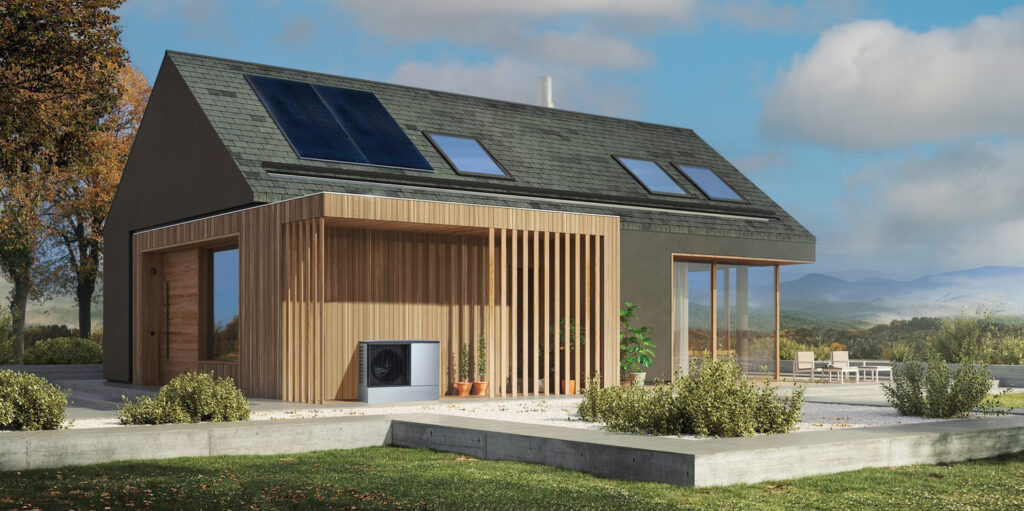
Air Source Heat Pumps
Air Source Heat Pumps are one of the most popular low-carbon heating options for UK homes. They extract heat from the air outside and transfer it into the home, providing both heating and hot water. Air source heat pumps are relatively efficient, with an average COP (coefficient of performance) of around 3. This means that for every unit of electricity used, they can provide three units of heat.
Advantages of Air Source Heat Pumps:
- Low running costs: Air source heat pumps are very efficient, which means they can save homeowners money on their energy bills.
- Environmentally friendly: Air-source heat pumps do not emit any carbon dioxide, making them a sustainable heating option.
- Suitable for a range of homes: Air-source heat pumps can be installed in most homes, including those with small gardens or no access to suitable land for a ground-source heat pump.
Disadvantages of Air Source Heat Pumps:
- Initial cost: Air source heat pumps are a more expensive upfront investment than gas boilers.
- Not suitable for all homes: Air-source heat pumps may not be suitable for homes with poor insulation. The colder the climate, the better the insulation required.
Ground Source Heat Pumps
Ground-Source Heat Pumps are another popular low-carbon heating option. They extract heat from the ground and transfer it into the home, providing both heating and hot water. Ground-Source Heat Pumps can bemore efficient than Air-Source Heat Pumps, with an average COP of around 4.
Advantages of Ground Source Heat Pumps:
- Very high efficiency: Ground source heat pumps are the most efficient type of heat pump, which can further reduce energy bills.
- Long lifespan: Ground source heat pumps are very durable and can last for up to 25 years.
- Suitable for a wide range of homes: Ground source heat pumps can be installed in most homes, regardless of their climate or insulation levels.
Disadvantages of Ground Source Heat Pumps:
- High initial cost: Ground source heat pumps have the highest upfront cost of all the low-carbon heating options.
- Requires excavation: To install a ground source heat pump, a system of pipes needs to be buried underground. This can be disruptive and expensive.
Water Source Heat Pumps
Water-Source Heat Pumps extract heat from the water in a lake, river, or well and transfer it into the home. They are similar in technology to ground source heat pumps but are more efficient in warmer climates.
Advantages of Water Source Heat Pumps:
- High efficiency: Water-source heat pumps can be even more efficient than ground-source heat pumps in warmer climates.
- Lower maintenance costs: Water source heat pumps do not require any excavation, which can save on maintenance costs.
Disadvantages of Water Source Heat Pumps:
- Access to water source: Water source heat pumps require access to a suitable water source, such as a lake or river.
- Permits and regulations: Obtaining the necessary permits and complying with regulations can be more complex for water source heat pumps.
Electric Boilers
Electric boilers are a more conventional low-carbon heating option. They use electricity to heat water, which can be used for both central heating and hot water. Newer electric combi boilers are a more efficient alternative to traditional electric boilers, but they still have higher running costs than heat pumps. There are a number of Electric Home and Hot Water Heating options to choose from.
Advantages of Electric Boilers:
- Quick and efficient: Electric boilers are very quick to heat water, making them ideal for homes with high hot water demand.
- Compact and easy to install: Electric boilers are compact and easy to install, making them a good option for homes with limited space.
Disadvantages of Electric Boilers:
- High running costs: Electric boilers have higher running costs than heat pumps due to the cost of electricity.
- Not suitable for all homes: Electric boilers may not be suitable for homes with very high heating demand.
Wood or Biomass Boilers
Wood or biomass boilers, fuelled by wood pellets, chips, or logs, offer an alternative to traditional heating systems reliant on fossil fuels. These boilers, burning renewable sources of energy, contribute to a more sustainable approach to home heating. However, they are not without their drawbacks, and careful consideration is necessary before making a decision.
Advantages of Wood or Biomass Boilers:
- Renewable fuel source: Wood and biomass are replenished naturally, reducing reliance on finite fossil fuels.
- Low running costs: Compared to gas boilers, wood or biomass boilers can offer lower running costs, especially in homes with efficient insulation.
- Suitable for off-grid homes: Wood or biomass boilers can operate independently, making them ideal for homes located in remote areas without access to the national grid.
Disadvantages of Wood or Biomass Boilers:
- Particulate emissions: Wood or biomass combustion can release particulate matter, affecting air quality. Modern boilers incorporate emission-control technologies to minimize this impact.
- Storage requirements: Wood or biomass fuels need to be stored, requiring dedicated space and ensuring adequate ventilation.
- Stove maintenance: Wood or biomass boilers require regular maintenance to ensure optimal performance and prevent safety hazards.
- Seasonal limitations: Wood or biomass boilers may not be suitable for all climates, as their performance is affected by outdoor temperatures.
Considerations for Wood or Biomass Boilers:
- Fuel availability: Ensure an adequate supply of wood or biomass fuel is readily accessible in your area.
- Local regulations: Check local regulations and emission standards to ensure your boiler meets requirements.
- Insurance implications: Consult your insurance provider regarding any potential coverage issues related to wood or biomass boilers.
- Environmental impact: Consider the environmental impact of sourcing and transporting wood or biomass fuel.
Micro-CHP Systems
Micro-combined heat and power (CHP) systems produce both heat and electricity from a single unit. They are more efficient than conventional boilers and can save homeowners money on their energy bills.
Advantages of Micro-CHP Systems:
- High efficiency: Micro-CHP systems can offer up to 40% efficiency, which is significantly higher than traditional boilers.
- Cost-saving: Micro-CHP systems can save homeowners money on their energy bills, especially those with high heating and electricity demand.
- Environmentally friendly: Micro-CHP systems produce very low levels of carbon dioxide emissions.
Disadvantages of Micro-CHP Systems:
- High initial cost: Micro-CHP systems have a high upfront cost, which can be a barrier for some homeowners.
- Noise pollution: Micro-CHP systems can be noisy, which may be a concern for some homeowners.
- Maintenance: Micro-CHP systems require regular maintenance, which can add to the overall cost of ownership.
Solar Thermal Water Heating Systems
Solar thermal water heating systems use solar energy to heat water for domestic use. They are a more environmentally friendly option than conventional water heaters, as they do not use fossil fuels.
Advantages of Solar Thermal Water Heating Systems :
- Sustainable: Solar thermal water heating systems do not emit any carbon dioxide emissions.
- Low running costs: Solar thermal water heating systems can significantly reduce energy bills, especially for homes with high hot water demand.
- Low maintenance: Solar thermal water heating systems require very little maintenance.
Disadvantages of Solar Thermal Water Heating Systems :
- Initial cost: Solar thermal water heating systems have a high upfront cost.
- Limited capacity: Solar thermal water heating systems may not be able to meet the hot water demands of larger households.
- Location: Solar thermal water heating systems are most effective in sunny climates.
We have a Guide to Solar and Solar PV Home and Water Heating in the UK
Hybrid Heating Systems
Hybrid heating systems combine two or more different heating technologies, such as a heat pump and a gas boiler. They offer the best of both worlds, providing a combination of efficiency, low-carbon emissions, and flexibility.
Advantages of Hybrid Heating Systems:
- High efficiency: Hybrid heating systems can achieve higher efficiencies than single-technology systems.
- Low-carbon emissions: Hybrid heating systems can reduce carbon dioxide emissions compared to traditional boilers.
- Flexibility: Hybrid heating systems can adapt to different heating demands throughout the year.
Disadvantages of Hybrid Heating System:
- High initial cost: Hybrid heating systems can have a higher upfront cost than single-technology systems.
- Requires maintenance: Both the heat pump and the gas boiler will require maintenance.
- Complexity: Hybrid heating systems can be more complex to install and operate than single-technology systems.
Summary Low Carbon Heating Guide
In conclusion, there are a number of low-carbon heating options available for UK homes. Each option has its own advantages and disadvantages, so it is important to carefully consider your individual needs and circumstances before making a decision. If you are considering switching to a low-carbon heating system, it is a good idea to talk to a qualified MCS installer or one of our Low-Carbon Heating advisors. They can help you assess your options and choose the best system for your home.